How Many SEO Keywords Should One Article Target? Map Intent First
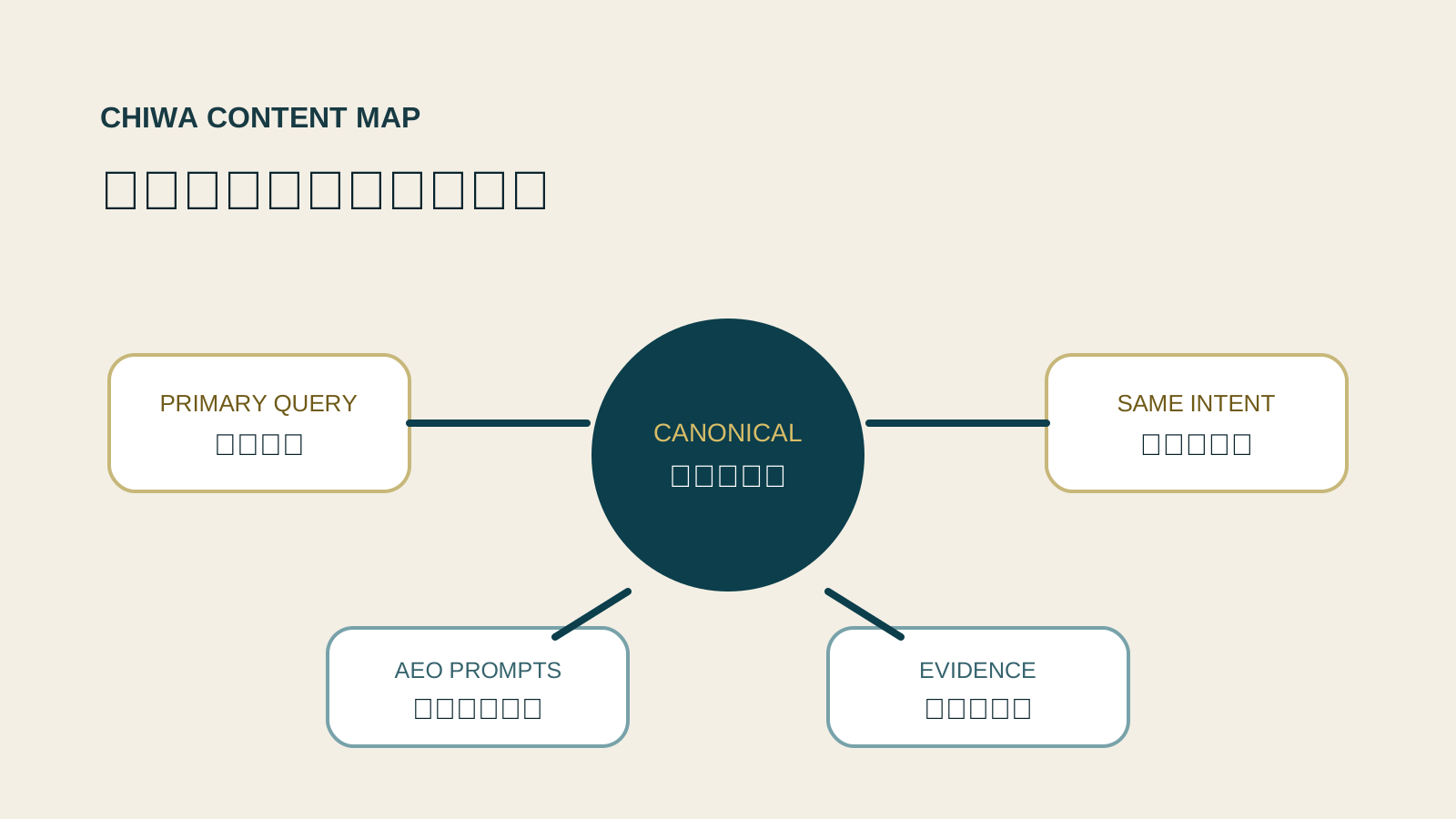
One article usually needs one primary search intent, supported by close variants, subquestions and entities; create separate pages only for distinct decision tasks.
Direct answer
One article usually needs one primary search intent, not a hard limit of one keyword. It can cover three to eight close variants and six to ten related questions. Create a separate page when the reader's decision, evidence or next action is genuinely different.
Keyword count is the wrong starting point
'Hong Kong ORM agency', 'online reputation management service Hong Kong' and 'company for handling negative reviews' may all represent a supplier-comparison task. One complete service page can serve them. 'What is ORM?' and 'What should a brand do in the first 24 hours after a negative review?' require different answers and actions, so they deserve different pages.
Five fields for every page
Record the primary query, the reader intent, close variants, AEO follow-up questions and the canonical page. Fill these fields before drafting. The title and H1 should describe the page clearly instead of concatenating every keyword.
Merge pages when they serve the same audience, decision, evidence and call to action. If they provide distinct examples, keep one canonical owner and link the supporting article to it with descriptive anchor text. Google recommends that every important page receive a link from another relevant page.
Split a page when the reader role, decision stage, evidence, risk, format or primary action changes. A pricing comparison needs ranges and criteria; a crisis response page needs escalation conditions, owners and a timeline.
Weekly measurement
Record the target before publication: primary query, same-intent variants, AEO Prompt IDs, canonical URL and publish date. Once Search Console is connected, add impressions, clicks, CTR and average position using complete comparable periods.
Average position is not a fixed rank. Google recommends focusing on impression and click trends, while low-volume queries can be withheld. Review both page-level performance and query groups rather than relying on one manual search result.
Frequently asked questions
Can one article target ten keywords?
Yes, if the terms express the same intent and one answer can satisfy them. Remove terms added only for density.
Must one of two competing pages be deleted?
No. Compare their purpose and value first. You can merge and redirect, reposition one page for another task, or retain one canonical owner with clearer internal links.
Should every AEO prompt become an FAQ?
No. Important questions can become main sections. Use FAQs for concise follow-ups and avoid repetitive blocks created only to cover prompts.
Sources
- Google guide to generative AI features in Search
- Google link and anchor-text best practices
- Google title link best practices
- Search Console performance use cases
Sources checked on 7 September 2026. This is a content-governance method, not a Google rule that each page may contain only one keyword.
Contact us
To build a keyword, AEO prompt and canonical-page map, contact Chiwa: https://www.chiwa.ai
WhatsApp: 6826 5126 | https://wa.me/85268265126
WeChat: jonesnghk