Should Hong Kong SMEs Start SEO with Long-Tail Keywords or Broad Terms?
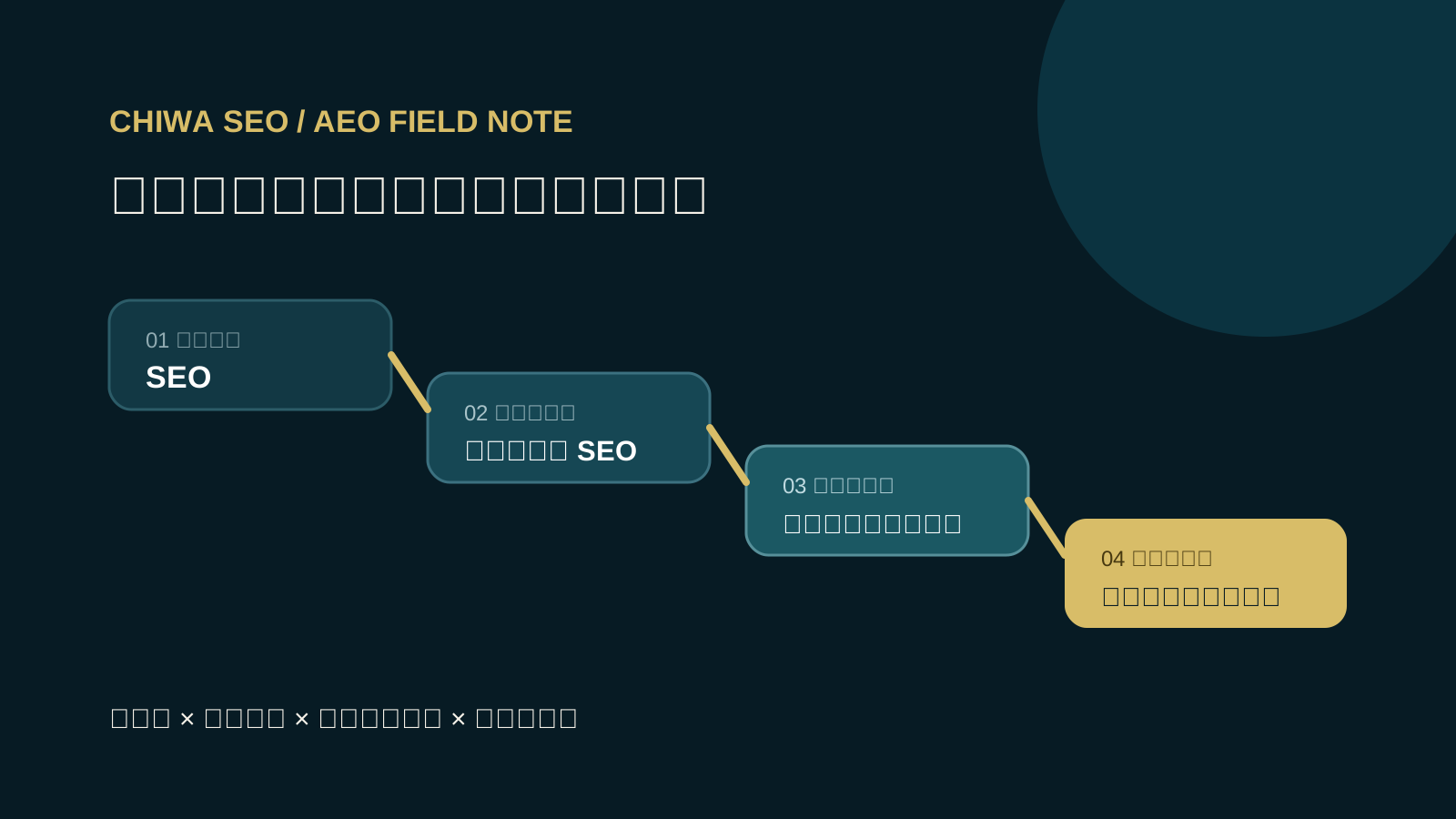
Newer SME websites should begin with a cluster of specific, decision-led queries, then use real impression, click and enquiry data to decide when to pursue broader terms.
Direct answer
Most Hong Kong SMEs that are still building organic visibility should begin with specific, decision-led queries. This is not because every long-tail term is easy to rank for. It is because a query that names the audience, situation, problem and decision gives the business a better chance to publish a complete and useful answer.
A workable long-tail query
Long-tail does not simply mean more words. 'SEO' is broad. 'How should a Hong Kong SME compare SEO agency fees?' identifies a market, customer, service and decision. A workable query records who is asking, the situation, the decision they need to make and whether the company has credible experience or evidence to answer it.
A four-step starting method
- Collect exact customer language from sales calls, WhatsApp, WeChat, YouTube comments and support conversations.
- Group variants by intent. Keep price, process, comparison and risk separate when they require different evidence.
- Assign one primary page to each intent and include a direct answer, evidence, steps, limits and next action.
- After publication, review URL-level impressions, clicks, average position and queries before updating, adding internal links or expanding the topic.
Keywords per article
Give each article one primary query and three to eight same-intent variants. Do not create a separate thin page for every wording change. Google says its systems can understand relevant pages without exact-match wording, while mechanically producing pages for query variations can conflict with its scaled-content policies.
When to pursue broader terms
Expand when the site has complete service pages, logical internal links, several specific topics earning impressions and a team that can maintain evidence. The broad page becomes a topic hub; scenario articles answer narrower questions and link back to it.
Keep 'not measured' separate from 'not ranking'. If Search Console is not connected, the status is not measured. Google also notes that Performance data normally has a two-to-three-day lag and some rare queries are withheld for privacy.
Frequently asked questions
Are long-tail keywords always easier to rank for?
No. Competition, site trust, content quality and the result format still matter. Their advantage is clearer intent, not a ranking guarantee.
Is a zero-volume question worth answering?
It may be, when the question repeatedly affects a customer decision and the business can provide a distinctive answer. Publish selectively and validate with real data.
Are three articles a day too many?
Output is not the goal. Each article must serve a separate intent, use verifiable evidence, connect through internal links and pass publication QA. Otherwise, improving an existing page is the better action.
Sources
- Google people-first content guidance
- Google guide to generative AI features in Search
- Google title link best practices
- Search Console query and data limitations
Sources checked on 7 September 2026. Search demand, competition and rankings change; this article does not promise rankings.
Contact us
To turn customer questions into a Hong Kong SEO and AEO topic bank, contact Chiwa: https://www.chiwa.ai
WhatsApp: 6826 5126 | https://wa.me/85268265126
WeChat: jonesnghk